Serving Port Charlotte, FL and surrounding areas
CPR, BLS and ACLS trainingthat saves lives.
Hands-on classes taught by a certified, AHA-authorized Instructor, right here in Port Charlotte. Small groups, flexible scheduling, and the two-year course completion card your employer is asking for.
Call or text — we answer both, and most requests get a reply the same day.
Call or text — we answer both
(941) 564-5766Experienced instructor
Credentialed ACLS & BLS instructor
AHA authorized
Official American Heart Association curriculum
Flexible classes
In person, blended & renewals
Official cards
Two-year validity · BLS & ACLS
Be the difference
Every. Second. Counts.
Classes
Which class do you need?
The names get confusing, and taking the wrong one is an expensive mistake. Here's the short version — or call and we'll tell you in two minutes.
CPR, AED & First Aid
Workplaces, families & the community
The course for anyone who isn't a healthcare provider but needs a course completion card — or simply wants to be ready if someone collapses at home, at work, or on the job site.
- Typically 2–4 hours, depending on the modules you need
- Two-year course completion card
BLS Provider
Healthcare providers & students
Basic Life Support is the professional-rescuer level course that hospitals, clinics and Florida licensing boards expect from clinical staff. It's the most common card we teach.
- Typically 3–4 hours for a first-time course, shorter for renewals
- Two-year course completion card
ACLS Provider
Advanced clinical providers
Advanced Cardiovascular Life Support builds on BLS with the algorithms, pharmacology and team leadership skills needed to run a code and manage a patient who is crashing.
- Typically a full day for initial, half day for renewal
- Two-year course completion card
Training more than a few people?
We come to your facility with everything needed and can run sessions in shifts, so you don't have to close for the day.
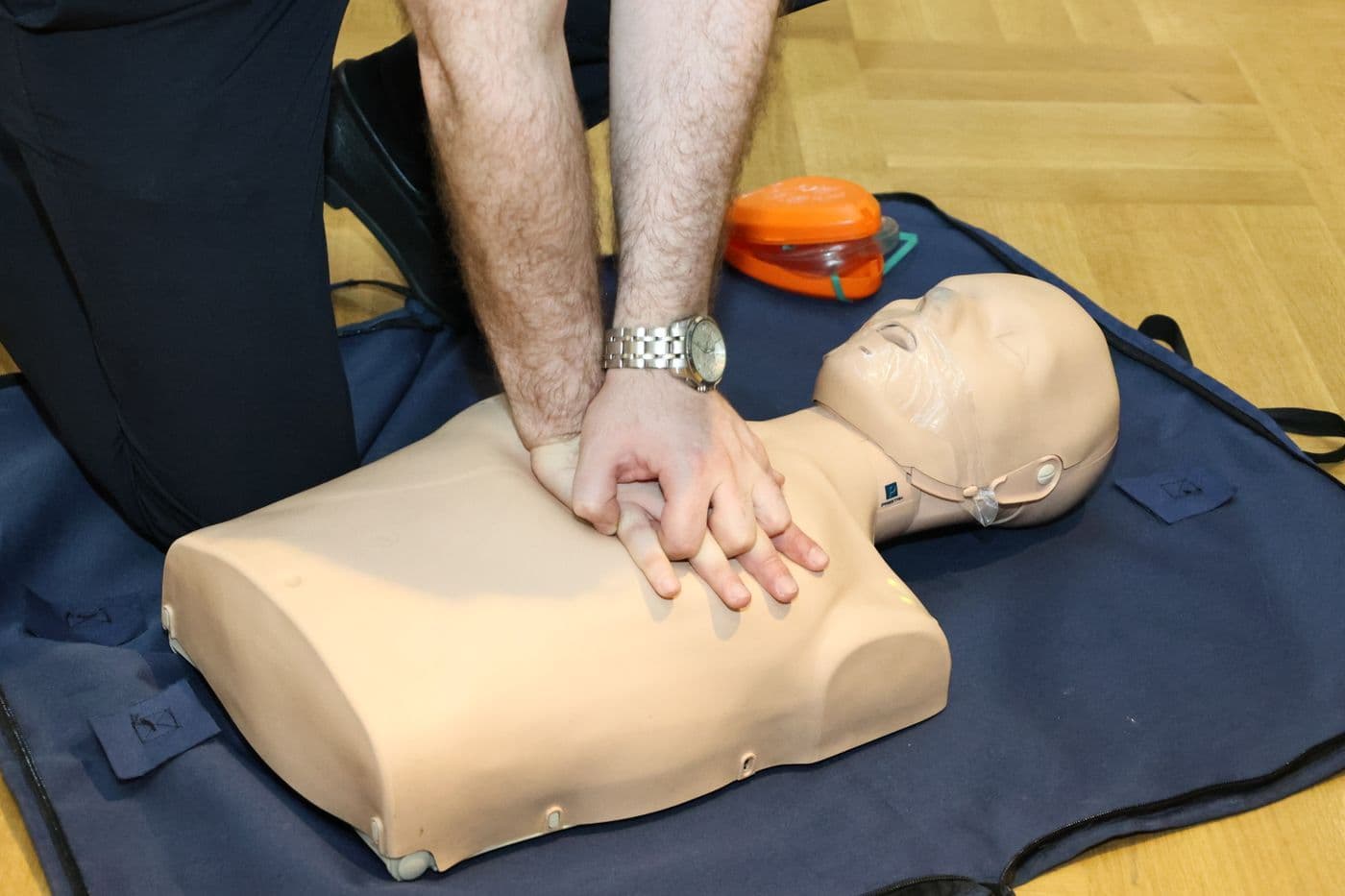
Why hands-on matters
Nobody rises to the occasion in a cardiac arrest. You fall back to the level of your training — which is why ours puts your hands on a manikin until the movement is automatic.
Compression depth, rate and recoil are simple to describe and genuinely hard to do well with adrenaline running. That gap is the whole job of a training class.
The chain of survival
Five links. Miss one and the chain breaks.
Survival from cardiac arrest depends on a sequence of actions happening fast and in order. The first two links belong to whoever is standing there — and that is exactly what we train you to do.
- Step 1
Recognize & call 911
Spot cardiac arrest and get help moving immediately.
- Step 2
Start CPR
High-quality compressions, started without hesitation.
- Step 3
Defibrillate
Get the AED on and deliver a shock as early as possible.
- Step 4
Advanced care
EMS and hospital teams take over resuscitation.
- Step 5
Recovery
Post-arrest care that protects the brain and heart.
Professional rescuer level
Florida's Board of Nursing expects BLS-level CPR for clinical roles — that's the course we teach.
Two-year cards
Official AHA course completion cards, the ones employers and credentialing offices ask to see.
Hands on the equipment
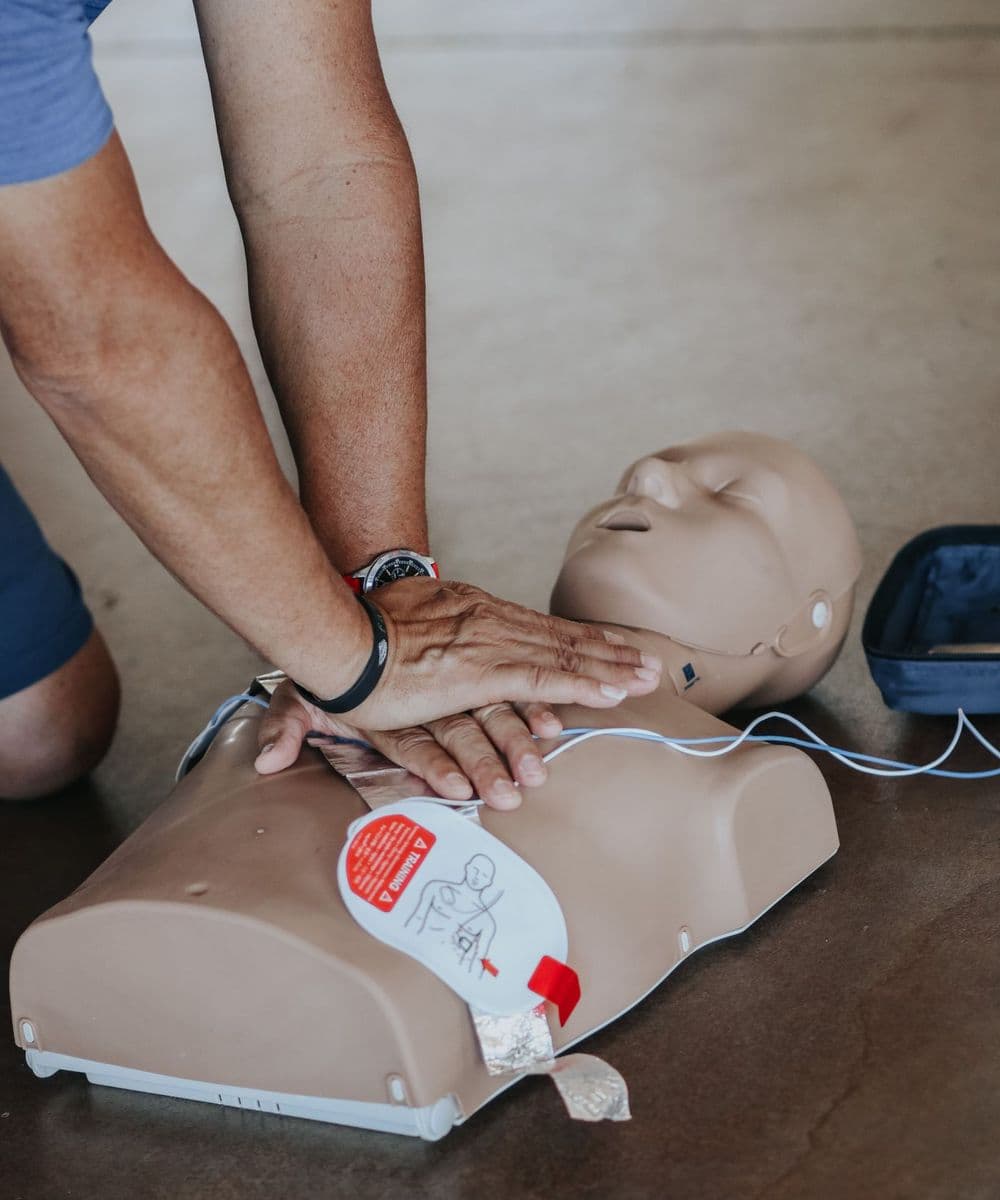
Manikins and AED trainers in every class. You practice the skill, not just watch it.
In the classroom
What good CPR actually looks like
Three things decide whether compressions move blood. They sound simple written down and they are genuinely hard to do well under pressure — which is the entire reason we train them with your hands on a manikin rather than your eyes on a screen.
2–2.4"
Compression depth
At least 2 inches (5 cm) on an adult, and no deeper than 2.4 inches. Too shallow moves no blood.
100–120
Compressions per minute
The same rate for adults, children and infants. We'll get you feeling that tempo in your hands.
Full recoil
Let the chest come back up
Leaning on the chest stops it refilling. It's the most common mistake we correct in class.
Figures follow the current American Heart Association Guidelines for CPR & ECC.
Who we train
From the hospital floor to the living room
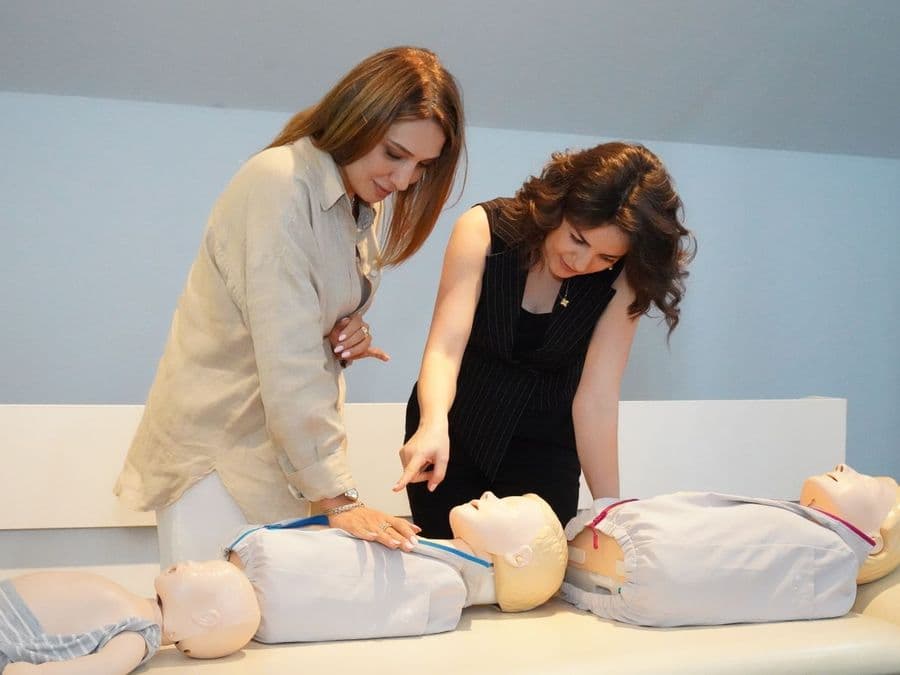
Healthcare providers
Nurses, dental teams, medical assistants, EMTs, therapists and students who need BLS or ACLS to work, to stay credentialed, or to start a program.
- BLS initial & renewal
- ACLS initial & renewal
- Nursing & allied health students
- Whole-unit group sessions
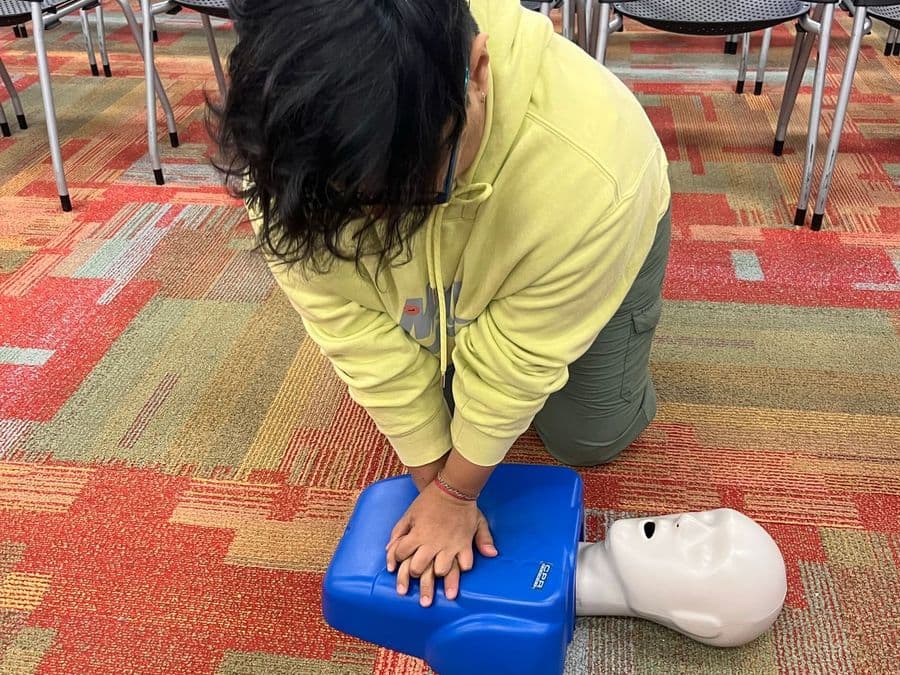
Workplaces & teams
Employers who need staff carded and confident — and would rather we came to them than lose a day of productivity.
- Onsite at your facility
- Sessions run in shifts
- Dental, clinical & office teams
- Gyms, schools & daycares
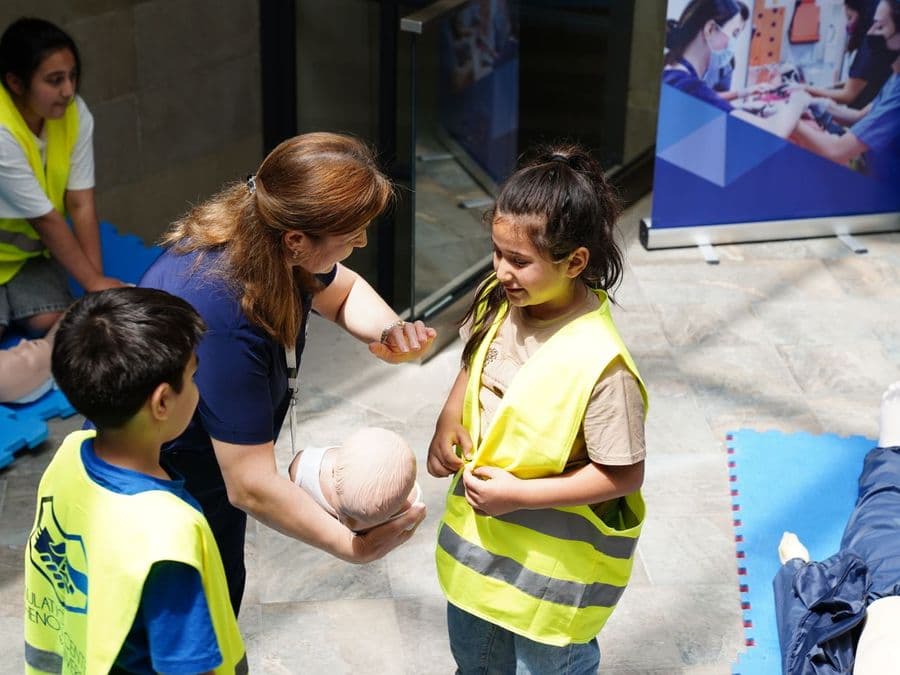
Families & the community
Charlotte County has one of the oldest populations in the country. If you care for a spouse, a parent or a grandchild, this is the skill you hope you never use.
- Adult, child & infant CPR
- Confident AED use
- Choking relief
- Caregivers & grandparents
The class itself
Small groups, real manikin time
A large class means watching someone else practise. We keep numbers down so every person gets enough time on the equipment to build the muscle memory that matters — and enough individual feedback to fix depth, rate and hand position before they become habits.
You will use an AED trainer, place the pads yourself, and work through choking relief for adults, children and infants. By the end you will have done every skill, not just seen it.
- Every student on the equipment, every session
- Technique corrected as you go, not graded at the end
- Skills check built into the class, no separate appointment
Why ReadyBeat
Training you'll actually remember under pressure
A card in your wallet is the easy part. Being able to act in the first 90 seconds — while everyone else is frozen — is the part that matters, and it only comes from doing the thing with your own hands.
Hands-on, not hands-off
You'll compress, ventilate and run an AED until it's automatic. We don't hand out cards to people who watched a video.
Small groups, real feedback
Enough manikin time per person to correct depth, rate and recoil — the things that actually change outcomes.
Scheduling that bends to you
Evenings, weekends, split shifts, or at your facility. Deadlines and expiring cards get priority.
The card employers accept
Official American Heart Association course curriculum and an official AHA course completion card — what Florida employers and licensing boards expect.
How it works
Three steps, no runaround
- 1
Tell us what you need
Call, text or send the form. Mention any deadline — an expiring card, a start date, a credentialing check.
- 2
We schedule around you
We'll confirm a time that fits, at our location or yours, and tell you exactly what to expect and how long it takes.
- 3
Train, test and get carded
Hands-on practice until the skills are solid, a straightforward skills check, and your two-year course completion card.
Every second counts
Survival from cardiac arrest falls with every minute that passes without CPR. In a county where help may be minutes away, the person standing closest is the one who decides the outcome.
Be ready. Be the difference.
Serving Port Charlotte and Southwest Florida
Individual seats, group classes and onsite training across Charlotte, Sarasota and DeSoto counties.
- Port Charlotte
- Punta Gorda
- North Port
- Englewood
- Rotonda West
- Venice
- Arcadia
- Charlotte County
- Sarasota County
- DeSoto County
Questions
The things people ask before booking
Which class do I actually need?
If you work in a clinical setting — nursing, dental, EMS, medical assisting — you almost certainly need BLS Provider. If you need a card for a non-clinical job (teaching, childcare, coaching, fitness, construction, office safety) or you just want to be ready at home, you need CPR, AED & First Aid. ACLS is for providers who run or participate in codes. Not sure? Call or text and we'll sort it out in two minutes — we'd rather point you to the right class than sell you the wrong one.
Will my employer accept this card?
Our classes use official American Heart Association course curriculum, taught by a certified, AHA-authorized Instructor, and you receive an official AHA course completion card. That's the card Florida healthcare employers and the Florida Board of Nursing expect for clinical roles — the Board requires CPR at the professional rescuer level, which is BLS. If your employer has given you a specific requirement in writing, send it to us before you book and we'll confirm the right course.
How long is my card good for?
Two years from the date you complete the course. We recommend renewing a month or so before it expires so you're never caught out by a compliance audit or a credentialing deadline.
My card already expired. Is that a problem?
Not for us. Depending on how long it's been, you may need to take the full course rather than the shorter renewal — tell us the expiration date and we'll tell you which one you need. Either way, we'll get you back in compliance quickly.
How much does a class cost?
It depends on the course, whether it's an initial or a renewal, and how many people are training. Group and onsite rates are better per person than individual seats. Call or text for a straight answer — no packages to decode and no surprise fees bolted on at the end.
Still not sure? Call (941) 564-5766 — no pressure, just an answer.
Request a class
Tell us what you need and we'll find a time that works. Most requests get a reply the same day.
- readybeattraining@gmail.com
- Serving Port Charlotte, FL and surrounding areas
- By appointment — classes scheduled around your availability, including evenings and weekends.